Soft Skills Hack: Top Ten Tips for Developing Soft Skills

No doubt your goal is to complete your college degree and get a job that you will enjoy.  As mentioned in my last blog entry, these days you need to be more than technically skilled to make it in the workforce.  Here are more detailed, practical ways for building and strengthening soft skills to better position yourself for career success.

1.  Strong work ethic
  • Get to class a few minutes early, prepared with all of the tools you need, and ready to hit the ground running when the professor starts to lecture.     
  • Show respect and courtesy for every classmate and college employee.  You're more likely to get it when you give it.
  • Say "please," "thank you," and "you're welcome" every time.  People naturally respond more positively to politeness. 
  • If you are treated with disrespect in any way, seek the help of the appropriate campus employee to help resolve the conflict peacefully.  Do not take matters into your own hands.   
  • If you're having difficulty dealing with challenges in your classes or personal life, ask a professor or college counselor for help.
  • Abide by the conditions of each class syllabus--reading assignments, deadlines for papers/presentations, attendance and participation, etc.  The syllabus is a contract between you and the professor, and if you choose to stay in the class after receiving it, then you're agreeing to the terms required and are expected to follow them.  All of them.
  • Respect deadlines and get all of your assignments done on (or better yet, before) the day they're due.  If you manage your time properly (see #4 below), then any last-minute crisis that may pop up in your personal life won't be made worse by having to beg your professor for an extension. 
  • If you make a mistake, take ownership of it, apologize with sincerity, and ask for help so you can do better next time.
2.  Positive attitude
  • Focus on what you're doing well, and be proud of those things.  Believe that you will continue to learn, improve and grow.  Realize the good things that are happening to you now, and have faith that more are on the way. 
  • Keep your eye on graduation, but stay focused in the present and be grateful for the opportunity you have been given.  Not everyone can or does go to college.  You're one of the lucky ones.
  • A cheerful disposition is far better received than someone who always complains and wears a scowl all the time.
  • Treat everyone with the respect and courtesy you expect in return.  ("Do unto others...")

3.  Good communication skills
  • Communication facilitates mutual understanding between people and builds strong, long-lasting connections and a firm foundation for relationships.  It involves being skilled in writing, speaking, listening, and reading.  In the workforce, you need to do all four very well.
  • Refine, hone and improve your writing skills by keeping a journal, writing for the campus newspaper or writing a blog.  Ask for constructive feedback from professors or other college staff whose writing skills you respect.
  • Strengthen your speaking skills by taking Introduction to Speech.  You will learn the proper way to speak in a way where you are precise, concise and convey the information you wish to share.  A bonus:  Employers LOVE when an applicant says they are comfortable speaking to groups of people.
  • Listen more than you speak.  (Weren't you given two ears but only one mouth?)  You will be amazed at how much you will learn by keeping your mouth shut.
  • If you disagree with an opinion, explain why without attacking the other person.
  • It is rude and disrespectful to interrupt, ignore, text or talk when someone else is speaking.  Pay close attention to what's going on in class--the information will probably show up on an exam.

4.  Time management abilities
  • Learn how to effectively use either a planner, time management software or an app.  If you've never managed your time in this way, it's time to start now.  Ask one of the Learning Center professionals to help you organize and document your academic and personal responsibilities.  Learning to rely on your planner will be awkward at first, but over time it will become second-nature.  And you'll slap yourself in the head and wonder why you didn't do it sooner.
  • Plan to arrive a few minutes early for every place you need to be:  class, club meetings, labs, appointments with a professor or advisor, etc.  Estimate how long it takes you to drive to campus, walk between classes, etc., and make notes in your planner to remind you when to leave the house, how much time you have between classes, etc.  Doing so will gain you an enormous amount of respect from professors and others, because arriving early will show that you value their time as much as you do your own.
  • Procrastination is a terrible habit to have.  Even if it's "worked" in the past because you still get good grades, submitting projects last-minute (or worse, late) because of improper planning will not ever work in any career.  Remember how miserable, anxious and frustrated you were the last time you procrastinated.  Wouldn't it be better to be so organized that what you need to accomplish gets done before the deadline?  Think of the huge relief and sense of accomplishment you would feel.  Your professors (and eventually, your employer) will be impressed.

5.  Problem-solving skills


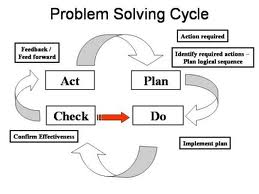
  • Approach any problem with a clear head and take your personal feelings out of it.  Ask for help in brainstorming with a professor, college professional or classmates for solution options. 
  • If you cause a problem, take responsibility for your contribution to it.  Blaming the problem on something or someone other than yourself makes you appear immature and irresponsible.  Take ownership of what you did wrong, then find and follow-through with constructive ways to solve the problem with maturity and integrity. 
  • Asking for help when any problem arises (big or small) is a personal strength...NOT a weakness.  There are a lot of free services on campus to help get you to your goal.

6.  Acting as a team player
  • Seek opportunities on campus to work on projects with other students.  For example, clubs, student government, volunteer organizations and theatre productions would love to have you join them.  Many hands make light work.
  • When a professor has your class do small-group activities, instead of groaning about corny or stupid they are, use them as opportunities to practice working with others collaboratively.  Practice your listening and speaking skills.  
  • Volunteer for leadership roles when you can, but it's equally as important to work as one of the team.
7.  Self-confidence
  • No one will believe that you are smart, capable, talented and skilled unless you believe it yourself first.  Make a list of your accomplishments, abilities, talents and skills.  Remind yourself every day what a wonderful and unique person you are until it becomes second-nature.  Note: this is not an exercise in arrogance or being conceited...don't confuse being sure of yourself with being stuck on yourself.
  • When an appropriate opportunity arises, share what you know about something you're passionate about, or share your ideas on a specific topic.  Show your confidence by raising your hand in class.  Research shows that students learn as much about the topic they're studying from their classmates as they do from the professor.
  • Be confident enough to ask questions when you don't know something.  Raise your hand in class every time you don't understand.  This will show that you are confident enough to admit when you don't know something, are willing to learn, and aren't afraid to seek out the correct answer.

8.  Ability to accept and learn from criticism
  • The word "criticism" has gotten a bad rap.  If you can view it instead as feedback or suggestions for improvement, then you're less likely to get defensive the next time you receive criticism.
  • For example, whenever a professor hands back work you've submitted, the grade you earned and notes written in the margins are forms of constructive criticism...the key word being constructive, which literally means "promoting improvement or development."  They are not meant to attack your intelligence, character or ability.  Use this feedback to help you construct techniques and skills to perform better the next time.
  • Be open to suggestions from others, and listen to what they have to say without judgment.  There's a saying that we only learn when we make mistakes, so identify what the lesson is, and make any necessary changes.
  • Consider joining professional organizations related to your career and the local Chamber of Commerce.  On campus, there's a group called Rotoract, whose purpose is to match students with local professionals who belong to the Rotary.  They provide mentoring and advice, and often will provide constructive criticism.  There is much to be learned from others who've walked that path before you, and they can perhaps convince you to avoid some of the mistakes they made.  These groups also provide many professional development workshops--often for free--and are yet another way to connect with people like you while learning how to become a respectable and respected professional. 


9. Flexibility/Adaptability
  • There's only two things that are certain in this life--death and taxes.  Everything else is subject to change.  Get used to this mindset.
  • The graphic to the left shows the qualities an organization looks for in their employees because they are the qualities that the organization itself values.  How does this apply to college?  Find out what your professor values in a student (the syllabus will tell you) or what a coach values in a team member.  Then DO IT.
  • When making an appointment with your professor, advisor or other campus employee, remember that their schedules are just as full as yours, so some flexibility is required.  Can you meet them during College Hour?  Come to campus an hour early? Stay a half-hour after your last class?  A little give and take goes a very long way.
  • Imagine this:  You realize that some of your classes next semester will meet at Center City.  You've never been there before and aren't too happy that you have to make the commute from the main campus.  You think it sucks, you get all bent out of shape, and want to complain to college authorities of what a stupid idea it is to hold classes downtown in the first place.  Adapting quickly to new circumstances is valued by every employer.  So when you're faced with something new, or are forced to make a huge change, how will you adapt?  Instead of getting all worked up, calculate the time you'll need to get to classes at Center City early.  Go inside the new building and get familiar with it ahead of time.  Or change your class schedule so you'll take all your classes in the same location.

10.  Works well under pressure


  • At the risk of sounding like a broken record, meeting deadlines is mandatory and non-negotiable.  Deadlines need to be met EVERY TIME.  Practice this skill by submitting all of your assigned work before they are due.
  • When you're stressed over deadlines and crises that seem to show up when you have the least time to deal with them, two things are happening.  One, you haven't managed your time properly; and two, circumstances outside your control have thrown a wrench into what you need to do.  When you find yourself in this situation, remain calm. Then, prioritize what has to be accomplished.  What do you need to handle first, second, third...?  Then do them in order.  Ask for help and delegate tasks to someone else you trust.  Do whatever it takes to get the job done ON TIME (working in the Library until it closes, working with a classmate to complete a project on the weekend, etc.).  Whatever it takes.
* * * * * * * * * * * * * * * * * * * * * * * * * * * * * * * * * * * * * * * * * * * * * * * * * * * * * *

These tips are merely suggestions on how to build your soft skills. Use what works for you, and feel free to come up with your own techniques.  Changing the way you think and behave will be a challenge, but don't give up.  Practice a new skill every day on campus and in your personal life.  And when making these changes start to make you crazy, remember this...once you graduate, armed not only with a college degree and perhaps some related job experience, your well-developed soft skills could give you a significant advantage over anyone who's competing for the job you want. 


You need an edge.  Get the edge.


QUESTION:  Which of these skills do you think you do well already, and which ones do you need to work on?  


(c) 2011 Robyn M. Posson
  

Interpersonal Abuse: You Don't Have to Be Hit to Be Hurt


Image:  layoutsparks.com
Relationships.  A popular subject of discussion with afternoon television-pseudo-psychologists, talk shows, movies and countless self-help books.  Relationships can be all-at-once exhilarating, frustrating, comforting and painful...reason being that we make these ties with others who are, like us, always in a process of changing and growing.  What is of particular interest, though, is how to know whether your relationship is a healthy one.

Before we delve into the topic in the title, let's first define relationships.  We have relationships with lots of people:  significant other/spouse, family, your doctor, friends, peers, classmates, a familiar bartender, gym trainer, hairdresser, professors, co-workers, bosses, and so on.  Each connection we make with another person has a unique dynamic, which refers to the rules that guide the interaction between two people, including how they behave, how they treat, and the level of respect they display for each other.

Image:  agendalove.com
That said, how do you know that yours is healthy and appropriate?   First, take a look at what your rights are in any relationship (including intimate ones):
  • To express your opinions and have them be respected
  • To have your needs be as important as your partner’s needs
  • To grow as an individual in your own way
  • To change your mind
  • To not allow your partner to control you, nor will you be allowed to control your partner
  • To not take responsibility for your partner’s behavior
  • To not be physically, emotionally, verbally or sexually abused
  • To break up with or fall out of love with someone and not be threatened
For a relationship to be fully functional, all of these rights must always be followed by both people.  We get into trouble when one or both parties fail to live up to these rights and responsibilities (especially the issue of control), and that's called abuse. Period.

In this month of October, where a lot of focus is drawn toward domestic violence awareness and prevention, it seems appropriate to tie into this topic by discussing all of the ways in which humans hurt and abuse others.  Not all of them include putting hands on someone else, but the pain, humiliation and the helplessness of being controlled are nonetheless deeply profound and disturbing to the one being abused.

Have you or your partner/family member/friend, etc. ever behaved in any of the following ways?


Psychological/Emotional Abuse
Q   Stalking (to follow, watch, harass, terrorize or other unwanted contact)
Q   Preventing sleep, rest or personal time
Q   Withholding approval or affection
Q   Making you feel as if you’re crazy in public or through private humiliation; playing mind games
Q   Making threats to commit suicide or murder
Q   Making threats of violence against significant third parties (family, friends, etc.)
Q   Excessive texts, IM’s or phone calls to check on your activity
Q   Unreasonable jealousy or suspicion
Q   Cheats on you, feels no remorse and expects you to accept it without complaint
Q   Forced drug or alcohol consumption
Q   Intimidation (making violent gestures, smashing things, destroying property, harming pets)
Q   Ignoring or discounting goals, dreams, activities or accomplishments
Q   Makes you feel you’re incapable of doing anything right, you’re stupid, ugly, fat, worthless, etc., and no one else will ever want you


Isolation
Q   Limiting outside involvement with a social support network
Q   Expecting you to report every move and activity
Q   Restricting use of the car
Q   Moving residences to prevent you from forming supportive relationships


Verbal Abuse
Q   Yelling
Q   Name-calling
Q   Shaming
Q   Putting you down
Q   Deliberate use of silence/ignoring


Intimidation
Q   Driving recklessly to make you feel threatened or in danger
Q   Destroying your property or cherished possessions
Q   Making you afraid by using looks/actions/gestures
Q   Throwing objects in anger to make you feel threatened
Q   Displaying and threatening to use weapons


Economic Abuse
Q   Rigidly controlling your finances
Q   Spending family income without consent and/or making you struggle to pay the bills
Q   Withholding money or preventing you access to your bank account
Q   Forcing you to account for every penny you earn and spend
Q   Withholding or forcing you to ask/beg for basic necessities (food, clothing, shelter, medications)
Q   Restricting you to an allowance
Q   Preventing you from working or choosing your own career
Q   Demand that you quit your job
Q   Refuses to get a job so the burden of supporting the family falls on you
Q   Sabotaging your job (making you miss work, showing up at your job and causing a scene, calling constantly)
Q   Stealing from you or taking your money overtly


Using Children or Pets
Q   Threatening to take the children away
Q   Making you feel guilty about the children; says you’re an unfit parent
Q   Abusing the children or pets to punish you
Q   Using the children to relay messages


Using Privilege
Q   Treating you like a servant
Q   Making all the big decisions without consulting with you
Q   Being the one to define male and female roles
Q   Acting like the king or queen of the castle


Sexual Abuse
Q   Sex on demand or sexual withholding
Q   Physical assaults during intercourse
Q   Spousal rape or non-consensual sex
Q   Using sexually degrading language
Q   Denying reproductive freedom
Q   You give in because denying your partner could result in an escalated altercation

Perhaps you hadn't considered that some of these behaviors are abusive, but THEY ARE.  If you are in a difficult relationship and want help to stop the abuse, please call the Counseling Center at 381-1365 and make an appointment with a counselor.

Image:  Google Images
For more information on the red flags to look for in intimate relationships, visit

Soft Skills Hack: Taking Personal Responsibility

Did you ever stop to think that everything you are or ever will be is completely up to you? That you are where you are because of who you are?  Truth is, everything that exists in your adult life exists because of you, your behavior, words, decisions and actions.  For example, you are a college student because you made the decision to pursue a degree, filled out the application, ordered your transcripts, registered for classes, and choose to go to those classes.  Nobody made this happen but you.

We all have freedom of choice, and because you have chosen each and every circumstance of your adult life, you are completely responsible for all of your successes and failures, your happiness and unhappiness, your present and future.  A really important lesson adults can learn is that no one else can make you succeed or fail, or feel happy or unhappy, empty or fulfilled.
The acceptance of personal responsibility is what separates the adult from the child. Children have neither the ability nor the freedom to make such high-level decisions.  But as adults, it’s the great leap forward into maturity. Responsibility is the hallmark of the fully-integrated, fully-functioning human being.  Which. Is. Good.


Responsibility goes hand-in-hand with success, achievement, motivation, happiness and self-actualization (reaching your greatest potential). It’s the absolute minimum requirement for accomplishing everything you could ever really want in life. Accepting that you’re completely responsible for yourself and realizing that no one is coming to the rescue is the beginning of peak performance.

The opposite of accepting responsibility is making excuses and blaming people, things and circumstances for what’s going on in your life. When people get into the habit of making excuses, they get into the habit of side-stepping responsibility at the same time.

Irresponsible people have a catch-all excuse they use whenever challenged with a difficult task or one that requires more self-discipline and persistence than they had thought.  As soon as things start to go poorly, they pull out their excuse and let themselves off the hook. And there they stay...with a goal that is left unfulfilled, and stuck in the belief that they are incapable of doing anything different or better.
When you take personal responsibility, you will:

* Acknowledge that you are solely responsible for the choices in your life.
* Accept that you are responsible for what you choose to feel or think and how you behave.
* Accept that you choose the direction for your life.
* Accept that you cannot blame others for the choices you have made.
* Hold the rational belief that you are responsible for determining who you are, and how your choices affect your life.
* Accept responsibility for the consequences of your actions.
* Admit when you make a mistake and have the desire to do better next time.
* Own up when you achieve something wonderful, without saying, "Oh, it was nothing" or "Anyone could do what I did."
* Realize that you determine your feelings about any events or actions addressed to you, no matter how negative they seem.
* Recognize that you are your best cheerleader; it is not reasonable or healthy to define yourself based on what other people think of you.
* Recognize that as you enter adulthood and maturity, you determine how your self-esteem will develop.
* Not feel sorry for the "bum deal" you have been handed but taking hold of your life and give it direction and meaning.
* Let go of your sense of over-responsibility for others.
* Protect and nurture your health and emotional well being.
* Structure your life with time management, stress management, confront fears and burnout prevention.
* Take an honest inventory of your strengths, abilities, talents, virtues and positive points.
* Develop positive, self-affirming, self-talk scripts to enhance your personal development and growth.
* Let go of blame and anger toward those in your past who did the best they could, given the limitations of their knowledge, background and awareness.
* Work out and let go of the anger, hostility, pessimism and depression over past hurts, pains, abuse, mistreatment and misdirection...then move forward with a new, healthier perspective.


Read more: http://www.livestrong.com/article/14698-accepting-personal-responsibility/#ixzz1ZLrQnYKD


(c) 2011-2016 Robyn King.  All Rights Reserved.


Soft Skills Hack: Improving Your Communication Skills

In my line of work, having well-developed communication skills is a requirement.  Counselors are trained to be active listeners, reiterate what we hear the other person has said, and to respond without giving advice or bringing our opinions or feelings into it.

The result is open, mutually-respectful communication where both people feel heard and understood, and a positive rapport develops between us.  It's human nature that we all want to be heard and understood.

Unfortunately, I estimate that about 95% of the difficulties students come to me with are directly related to poor or inadequate communication.  No joke. 

The tough part is that most (if not all) people think they're great communicators, but that high percentage I just quoted blows that mindset out of the water.

There are three relatively simple steps to improve how we communicate with others.

Listen actively.  This means that you are listening only to what the other person is saying.  You're not up in your head, thinking of the next thing to say (you can't listen and think at the same time--trust me on this one).  You're paying attention to the words and the feelings that are wrapped around them.  Look directly at them, and show your interest in what they're saying.

Summarize.  You simply restate what the person has said.  A good way of doing this is, "If I heard you correctly, you said ___________."  This shows the other person that you really did hear what he/she said, gives them the opportunity to either correct you or fill in anything that you might have missed.  (If he/she is going on for a bit, stop them politely by saying, "Hold on...I want to make sure I'm hearing everything you've said so far.  Am I correct that you said ________?" Then ask them to continue.)


Respond only to what the other person has said, without giving advice or sharing your feelings or opinions.  This is where it gets a little difficult.  We're so accustomed to solving problems, telling others what we think is right, and how we feel about things.  But when we do this, we are actually breaking down that communication with the other person.

This video (courtesy of http://www.rhemaresourcecentre.com/) does a very good job at further explaining these techniques (Note:  the video content actually ends at 2 minutes and 30 seconds.)


Here's a conversation between good friends done in two ways (see if you can choose the better way of communication):

VERSION ONE
Lucy:  I hate my roommate!
Charlie:  What happened?
Lucy:  She borrowed clothes without asking and ruined one of my shirts.  I hate her!
Charlie:  Yeah, she's a b&*%$.  My brother took my PS3 and spilled soda on it and now it's a piece of crap.  He's always pulling crap like that.  I hate him.  My parents are always up my butt, too.  I need to move out and get my own place.
Lucy:  Are you listening to me?
Charlie:  Uh, yeah, right.  What were we talking about?
Lucy:  How much I hate my roommate!
Charlie:  Right.  I think you should go in her room, trash it, take one of her shirts and slice it up, then leave it on her bed.  That'll teach her not to mess with your stuff.
Lucy:  You're a whack job, Charlie Brown.  Later. 


VERSION TWO
Lucy:  I hate my roommate!
Charlie:  What happened?
Lucy:  She borrowed clothes without asking and ruined one of my shirts.  I hate her!
Charlie:  I can tell you're really mad at her for not asking your permission and then ruining your shirt.
Lucy:  Yeah, I'm mad!  It was my favorite shirt.  I hate that she does stuff like that.
Charlie:  I can relate.  No one likes to be disrespected.
Lucy:  You hit it on the head.  She disrespects me all the time and I don't know what to do.
Charlie:  What do you think you could do to let her know how you feel?
Lucy:  I need to talk to her...and maybe change the lock on my room.
Charlie:  Talking to her?  Changing the lock?  I think those are good ideas.
Lucy:  Thanks, Charlie.


As corny as these examples may seem, you can see the huge difference in how they ended.  Lucy felt heard and understood, and appreciated Charlie's support in the second version.  He validated her feelings, and instead of giving her advice or his opinion, he let her come up with a solution that would work for HER.  Their friendship is a little bit stronger as a result.


You, too, can improve your communication skills by trying these techniques.  As a result, you will notice that you'll have fewer disagreements and arguments, and your relationships with be stronger and healthier.

(c) 2011-2016 Robyn King.  All Rights Reserved.