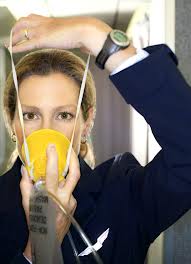
Wellness wisdom: Put the oxygen mask on yourself first.


Image: Google

If you've ever flown on a commercial airplane, you've no doubt sat through the emergency shpiel given before take-off.  My favorite part is the oxygen mask:  In the event of an emergency, I am to put the mask on myself first so that I may help others around me.

This instruction is also true of daily living.  Some of us are givers, and give-give-give until we have nothing left for ourselves and wonder why we're always tired, out-of-steam, anxious and not very happy.

The oxygen mask represents making self-care the primary priority.  It's literally our life-line that must be attended to daily.  Are you eating at least three times a day with healthy snacks between?  Drinking 8 cups of water?  Getting regular exercise?  Waking up refreshed after a good night's sleep?  Having FUN?  

If we're not at our best, how can we expect to be of any use to others?

Do not, however, confuse this with being selfish (which I think is a horrible word, but that's another blog post).  Taking care of ourselves is mandatory, because...when you think about it...you're all you've got.

Put the oxygen mask on yourself first, then proceed to assist others.  (Complimentary peanuts and soft drinks will be distributed momentarily.)


(c)2013 Robyn M. King.  All Rights Reserved.

Career Love: 11 Reasons why I do what I do.


"The greatest good you can do for another is not just share your riches, but to reveal to him his own." (Benjamin Disraeli)


When I tell people what I do for a living, most are typically intrigued.  They want to know what counseling is all about, do I have a couch in my office, wonder how on earth could I do this kind of work, and state vehemently that they couldn't ever work with "crazy people."  Well, to satisfy those kind of curiosities, here's a list of some of the reasons I do what I do.


1) I have the career I dreamed and worked towards for about for 25 years.  (It was worth the wait.)

2) I have never met a crazy person in my work.  Never.  Only people (like you and me) who don't know how to deal with the crazy circumstances life has a way of throwing at us. 


3) If I won the PowerBall lottery, I would keep this job.  Seriously.  I would.  I love it THAT much.


4) I LOVE working with college students. 


5) I am in awe of the changes people can and do make which then empowers them to complete their academic, personal and career goals.  Doesn't get better than that.


6) I hold up a mirror to show what I see in them.  Bringing to someone's attention that they already have within them the traits, skills, abilities and strength to solve whatever is challenging them is a powerful moment in that person's experience.  That kind of reminder from an impartial observer can literally change a person's life.


7) Supporting people while they pull themselves out of a difficult situation and have a better quality of life is worth more to me than any PowerBall lottery pay-out. 


8) I LOVE writing this blog, and am delighted that so many people are visiting and hopefully learning something new. 

9) I am passionate about being a lifelong learner to improve my skills, expand my experience base, and implement new modes in which to best deliver counseling services and wellness programs to everyone with whom I meet. [At this update, I'm earning my certification as a CEAP.]


10) I’m grateful that I get to do this kind of work.  I'm fully aware that jobs like mine are hard to come by.  I'm so lucky to have this job!


11) Of all of the careers I've had, I most enjoy coming to work every day as a therapist, and can't imagine doing anything else.


***May 2016 update:***  
I've decided to retire from my dream job…not because I've stopped loving it, but because I want to take it in a different direction:  I want to start a private practice and consulting business!  I'm excited, sad, petrified, and eager for this Second Dream Job to begin.


QUESTION:  Are you loving what you do for a living?  If yes, how did you get to where you are?  If not, what will it take for you to get there? 


©2013-2016. Robyn King. All Rights Reserved.

A league of your own

Tal Bachman

Let's get one thing straight.  There is no such thing as being "out of someone's league." 

If you believe in this imaginary hierarchy, then your own insecurities make you a not-so-great romantic prospect.  Johnny Castle in Dirty Dancing thought Baby was too good for him.  Tal Bachman (above) sings about it.  

No one wants to be around insecure people--except for other people who are equally or more insecure than you.  Period. 

Insecure people have insecure, unstable relationships.  Taking a "let's wait and see" attitude will most likely lead to a missed opportunity to meet someone wonderful. 

On the other hand, if you know you have some great qualities that a love-partner would appreciate, then pull up your Big Girl Panties or Big Boy Boxers and get crackin'.

If you’ve been crushing on someone lately, grow a backbone and strike up a conversation.  For all you know, they consider you out of their league and are waiting for you to make the first move.

And if the worst thing that could happen is you being awkwardly friend-zoned or being shot down, I’d say it’s worth the risk.  You gotta be in it to win it.

You are in league of your own.  Find someone who wants to be in it with you.

(c)2013 Robyn M. Posson  All Rights Reserved.

Graduation!

Midway through Spring semester is the time when I start to notice a special kind of energy on our campus.  Crocuses and tulips poke their heads up from a long, cold slumber to welcome the nicer weather.  Students socialize outside:  talking, playing guitar, kicking around a hacky-sack.  Heavy outer layers give way to lighter jackets and sweaters.  Hard-working groundspeople sweep away the vestiges of winter, plant flower beds and mow the first grass of the season.  Students buckle down and spend more time in the computer labs and with tutors.  Every member of the campus community (in one way or another) is in high-gear, preparing for the end of the academic year and graduation.

Graduate celebrating her Disney Internship experience
The notable chicken wing hat
Every May, we celebrate the successes of our students who earn their certificate or degree by having our pomp and circumstance in Proctor's Theatre, an opulent, historic venue that has a rich and varied history which dates all the way back to Vaudeville days.  Faculty don academic regalia.  Family and friends fill the balcony and happy hoots and hollers for their loved ones sound like music.  Students look regal in their black robes; some decorate their caps, while at least one Culinary Arts grad wears rubber food on his head and Fire Protection students lose the mortar board and proudly sport their protective helmets (complete with tassel) instead.  A beautifully catered reception follows, and graduation parties are eagerly anticipated.  It's a joyous occasion for everyone involved.
Firefighters mean business!

For many students, however, what accompanies this rite of passage are conflicting feelings of joy, relief, eager anticipation, fear, worry and sadness.

"I have my degree!  GO me!"  versus "I have my degree...now what?" 

"Can't wait to start my new job next week!"  versus "I don't have a job yet...what am I going to do?" 

"I can't wait to transfer in the Fall!" versus "I love SCCC...I don't want to leave!" versus "I have absolutely no idea what I'm doing in the Fall."

Graduating students who struggle with the next chapter can turn it around by being proactive.  Visits to the Opportunity Zone can assist with resume writing, interview skills and making important career connections.  An appointment with our Transfer Counselor can provide guidance with making a solid plan to continue one's education.  Talking about these conficting feelings with a Counselor can help sort out these concerns, and morph them into hope and eager anticipation of what's to come.

In other words, it's not too late.

To every one of our graduates:  Warm and heartfelt congratulations on your remarkable accomplishments, given the many responsibilities you managed to juggle.  Regardless of whether you have concrete plans for the next few months, you deserve to feel proud of the knowledge, skills, talents and abilities you've acquired and honed during the short time you were here. (Cue the applause!) 

All of us at SCCC are proud of you, too.  Damn proud. 

Best wishes for the adventure that lies ahead.


(c)2013 Robyn M. Posson.  All Rights Reserved.

Good grief: What is it, for crying out loud?


Sounds like an oxymoron, eh?  Anyone in the throes and agony of grief would call it anything but good. 

But it is.

What is it?
According to the Mayo Clinic, grief is a natural reaction to loss.  It’s the emotional suffering you feel when something or someone you love is taken away. The more significant the loss, the more intense the grief will be. People may associate grief with the death of a loved one (which is often the cause of the most intense type of grief) but any loss can cause grief, including:

  • Divorce or relationship breakup
  • Loss of health
  • Losing a job
  • Loss of financial stability
  • A miscarriage
  • Retirement
  • Death of a pet
  • Loss of a cherished dream
  • A loved one’s serious illness
  • Loss of a friendship
  • Loss of safety after a trauma
  • Selling the family home

Grieving is a personal and highly individual experience. How you grieve depends on many factors, including your personality and coping style, your life experience, your faith, and the nature of the loss.

The grieving process takes time. Healing happens gradually; it can’t be forced or hurried – and there is no “normal” timetable for grieving.  It takes as long as it takes.  Some people start to feel better in weeks or months. For others, the grieving process is measured in years.

Whatever your grief experience, it’s important to be patient with yourself and allow the process to naturally unfold.


carolecartercounseling.com

Myths and Facts About Grief

MYTH: The pain will go away faster if you ignore it.
Fact:  Trying to ignore your pain or keep it from surfacing will only make it worse later on. For real healing it is necessary to face your grief and actively deal with it.

MYTH: It’s important to "man up" or be “be strong” in the face of loss.
Fact:  Feeling sad, frightened, or lonely is a normal reaction to loss.  Crying doesn’t mean you are weak.  You don’t need to “protect” your family or friends by putting on a brave front. Showing your true feelings can help them and you.

MYTH: If you don’t cry, it means you aren’t sorry about the loss.
Fact:  Crying is a normal response to sadness, but it’s not the only one.  Those who don’t cry may feel the pain just as deeply as others. They may simply have other ways of showing it.

MYTH: Grief should last about a year.
Fact: There is no right or wrong time frame for grieving.   It takes as long as it takes.


Next:  Why does it hurt so freakin' bad?


Source:  http://www.helpguide.org/mental/grief_loss.htm
(c)2013 Robyn M. Posson

Good grief: Why does it hurt so freakin' bad?


Did you know that crying is the fastest method to release stress hormones?
Tears are composed mostly of water, salt and cortisol.


Why does it hurt so freakin' bad?
Grief can often overwhelm us with both psychological and physical symptoms at a time when we are in a weakened state to deal with them. We are bombarded with a constant stream of thoughts and emotions, and our bodies feel like crap. We worry that the pain, sadness and inner chaos will never end. 

Grieving causes distress because it hurts so intensely and we are never quite prepared for the impact it produces. To ease your mind, what follows is a breakdown of the typical psychological and physical symptoms people in distress often experience.

Common psychological reactions to traumatic events
  • overwhelming sadness
  • disbelief, stress, discomfort
  • emotional numbing, confusion
  • nightmares and other sleep disturbances
  • anger, fear, moodiness, and irritability
  • disinterest in maintaining good hygiene
  • flashbacks
  • survivor guilt
  • hypervigilance ("radar" is always on), jumpiness, easily startled
  • loss of hope
  • social withdrawal
  • increased use of alcohol and drugs
  • desiring isolation from others
Typical physical symptoms
  • increase in cortisol (a stress hormone)
  • loss of appetite or desire to eat more than usual
  • insomnia or sleeping too much
  • feeling lethargic or exhausted most of the time
  • forgetfulness
  • confusion or feeling "foggy-headed"
  • amplified aches and pains
  • inability to concentrate
  • nausea
  • constipation or diarrhea
  • chest pressure
  • racing heart
  • shortness of breath
  • panic attacks
  • increased anxiety
Just remember that almost anything that you experience in the early stages of grief is normal – including feeling like you’re going crazy, feeling like you’re in a bad dream, or questioning your religious beliefs.

However, if your distress causes debilitating pain or thoughts of suicide, call 911 and seek emergency help immediately.

Next:  How do I get it to stop?

(c)2013 Robyn M. Posson

Good grief: How do I get it to stop?

How do I get it to stop?


Coping with grief and loss tip 1: Get support

The single most important factor in healing from loss is having the support of other people. Even if you aren’t comfortable talking about your feelings under normal circumstances, it’s important to express them when you’re grieving. Sharing your loss makes the burden of grief easier to carry. Wherever the support comes from, accept it and do not grieve alone. Connecting to others will help you heal.


  • Turn to friends and family members – Now is the time to lean on the people who care about you, even if you take pride in being strong and self-sufficient. Draw loved ones close, rather than avoiding them, and accept the assistance that’s offered. Oftentimes, people want to help but don’t know how, so tell them what you need – whether it’s a shoulder to cry on or help with funeral arrangements.
  • Draw comfort from your faith – If you follow a religious tradition, embrace the comfort its mourning rituals can provide. Spiritual activities that are meaningful to you – such as praying, meditating, or going to church – can offer solace. If you’re questioning your faith in the wake of the loss, talk to a clergy member or others in your religious community.
  • Join a support group – Grief can feel very lonely, even when you have loved ones around. Sharing your sorrow with others who have experienced similar losses can help. To find a bereavement support group in your area, contact local hospitals, hospices, funeral homes, and counseling centers.
  • Talk to a counselor – If your grief feels like too much to bear, call a mental health professional with experience in grief counseling. An experienced therapist can help you work through intense emotions and overcome obstacles to your grieving. It is not a sign of weakness to ask for help.

Coping with grief and loss tip 2: Take care of yourself


When you’re grieving, it’s more important than ever to take care of yourself. The stress of a major loss can quickly deplete your energy and emotional reserves. Looking after your physical and emotional needs will help you get through this difficult time.

  • Face your feelings. You can try to suppress your grief, but you can’t avoid it forever. In order to heal, you have to acknowledge the pain. Trying to avoid feelings of sadness and loss only prolongs the grieving process. Unresolved grief can also lead to complications such as depression, anxiety, substance abuse, and health problems.
  • Express your feelings in a tangible or creative way. Write about your loss in a journal. If you’ve lost a loved one, write a letter saying the things you never got to say; make a scrapbook or photo album celebrating the person’s life; or get involved in a cause or organization that was important to him or her.
  • Do not neglect your body. The healthier you are physically, the better you will be able to cope emotionally. If you have existing health problems, see your doctor to monitor your condition. Make sure that stress does not cause problems. Eat properly and get enough rest and exercise.
  • Don’t let anyone tell you how to feel, and don’t tell yourself how to feel either. Your grief is your own, and no one else can tell you when it’s time to “move on” or “get over it.” Let yourself feel whatever you feel without embarrassment or judgment. It’s okay to be angry, to yell at the heavens, to cry or not to cry. It’s also okay to laugh, to find moments of joy, and to let go when you’re ready.
  • Learn some healthy relaxation techniques.
  • Take a break from your grief and do something you enjoy. Finding a moment of joy does not mean you are disloyal to the memory of your loved one.
  • Plan ahead for grief “triggers.” Anniversaries, holidays, and milestones can reawaken memories and feelings. Be prepared for an emotional wallop, and know that it’s completely normal. If you’re sharing a holiday or lifecycle event with other relatives, talk to them ahead of time about their expectations and agree on strategies to honor the person you loved.

There is life after grief.   If you allow yourself to grieve in the short term, you will feel better in the long run.   You will feel happy again. Your life will go on.

Promise.


Sources:   Nancy E. Crump, M.S., Certified Grief Counselor
Coping with Grief and Loss 

(c)2013 Robyn M. Posson

Women Leaders: Are we too critical of each other?

Mayer and Sandberg
Marissa Mayer, CEO of Yahoo, and Facebook COO Sheryl Sandberg have gotten a helluva lot of press lately:  Mayer made some tough decisions about axing the work-at-home option for 200 Yahoo employees.  Sandburg is speaking out about how women stand in the way of their own successes.

For a more thorough explanation, check out this article by Mashable.com:  http://mashable.com/2013/03/14/women-leaders-tech-criticism/?goback=%2Egde_4409416_member_223465958

Personally, I'm befuddled by this topic. There's nary a blink-of-an-eye when men climb over each other to get to the next rung on the ladder of success.  Men wouldn't dream of talking about how to be a "brother-friend" and "lifting each other up."  It's instead an "every man for himself" mentality that has a very long and well-established history in the business arena. 

So why are we asking women in (or aspire to be in) executive positions to behave or react any differently than their male counterparts?

Regardless of  the gender doing the speaking up, leaning in, or climbing over, there are benefits and consequences with which to deal as a result of being a leader.  Young professionals to be mentored.  Strategies to grow the company.  Connections to be made.  Opportunities to be provided.

Anyone who is passionate about moving his or her career forward must be uber-confident in their abilities, courage to speak their truth, have skin thick enough to endure the slings and arrows of critics, have rock-solid integrity to be guided by, and be absolutely fearless in the pursuit. 


QUESTION:  What's your stand on this topic?

(c)2013 Robyn M. Posson

Excuses, excuses

I regularly meet with people who are not happy in or satisfied with their intimate relationships because they are violent, drama-ridden and chaotic.  Many, however, mention that their partnerships aren't horrible.  Mediocre.  Not-so-bad.  They believe that it's perfectly appropriate and typical to feel this way most of the time, but feel bad that they aren't more jazzed about their partners, or their partners seem distant and disinterested. 

Being in a “so-so relationship” is not a relationship at all.  A relationship is either good, or it's not.  When it’s good, each partner is fully invested in and committed to the health and growth of their partnership. 

When it’s not, it sucks all of the time. 

A woman who calls her relationship “so-so” isn't getting what she requires to be happy.   She’s also afraid to admit that it’s time to make a clean break and move on. 

My bottom line is no one should ever settle for anything less than a good relationship.  There's no reason to. 

Below are examples of the reasons women are reluctant to walk away from relationships that "aren't so bad," and my responses follow each one.

````````````````````````````````````````````````````````````````````````````````` 

"I'm afraid of being single or starting over."
Fear has no place in a relationship.  It’s only when you feel good about yourself, your life and are emotionally, socially and financially self-sufficient that are you ready to be with a partner.  When you can say that you’re really okay living your fabulous life without a partner to share it, that’s the time to invite someone in who’s equally independent.

"He's such a nice guy."
Of course he’s a nice guy…that’s why you chose to be with him!  Your partner doesn’t have to be a distant, unaffected, disengaged jerk to be the wrong person for you.  It would be unfair to string him along while you feel the way you do.  You know how to find a nice guy, so find another one who you really want to be with.   

"He loves me so much (but I'm lukewarm about him)."
You do not have a relationship.  Both partners in healthy relationships feel the same level of affection, caring, respect and love the majority of the time.  When this balance is off long-term, and you are not working particularly hard at remedying the situation, it’s time to move on.

"I love him so much (but he's lukewarm about me)."
Why would you continue to chase after a partner who doesn’t feel the same way about you?  You deserve to receive at least as much love as you give.  If not, it is not a relationship.

"I can change him."
Hear me clearly:  You do not have the power to change anyone but yourself.  You can’t love him enough, do enough, or support him enough to change how he feels about you.  You can change your own thoughts, feelings and behaviors, though.  You can decide that you deserve better and take action to have better.  Find a partner who will be so grateful that you chose him, that he will do everything he can to show how much he loves and appreciates you as-is.  This is what a mutually-satisfying relationship feels like.


"The sex is amazing."    
Satisfying sex is important in every healthy relationship, but it’s only a part.  What else do you find amazing about your partnership?  In what other non-sexual ways do you work together to feel good and develop your bond?  You can’t sustain a relationship based only on how great he is in bed.  In time, his desire for (and adeptness at) sex will decline, and then how else will your partnership be sustained?  Think about how mind-blowing sex would be with someone who works as skillfully at making the whole relationship feel good the majority of the time…that kind of devotion is one you can rely on long after passion fades.

"I want to have kids fairly soon."
It’s perfectly appropriate to consider the limited amount of time women really have to start a family.  But having kids with a man who you feel only so-so about is not only bad for you—and him—but your children will grow up thinking that the kind of ill-fitting, unsatisfying relationship you have is the kind to seek for themselves.  You wouldn’t want that for them, right?  So you most certainly shouldn’t want that for yourself either.

"We have so much in common." 
Again, it makes sense that you share interests and experiences…you’re together, after all.  But common threads alone aren’t strong enough to make the relationship worthwhile if you’re not feeling it for him.  It’s just not enough.

"He has a great job he loves."
Wonderful!  It makes a man feel strong and important when he loves what he does for a living and is recognized for it.  The difference between a great relationship and one that’s not so great is the amount of time he spends at work.  Are you both coming home around the same time, sharing dinner and discussing your day?  Or are you eating alone most nights, not knowing when to expect him?  A partner who would rather spend more time working at a job he loves than spending more time with the woman he loves is working his way out of the relationship.

"He's really cute."
There’s plenty of research around that states that attractiveness is an integral part of pairing up.  Makes sense, right?  However, looks are unimportant if a man treats you badly, ignores you, or is indifferent to the relationship.  A so-so looking man who works consistently at making you feel respected, cared for and loved unconditionally will be far more attractive to you than a pretty boy who doesn’t give two hoots.


"He's great with grand or romantic gestures."
Doesn’t it feel wonderful when your partner surprises you with flowers, gifts and lavish vacations?  It’s like the cherry on top of the ice cream sundae!  My question to you is, what is he doing every day, in small ways, to make you feel loved, respected and cared for?  Those gestures that he’s not pointing out to you, or doing in public where everyone can see?  For example, does he brush the snow off your car so you don’t have to?  Does he make the bed because you don’t have time in your rush to get out of the door in the morning?  Does he sit with you to watch a chick-flick without snide or rude remarks?  These day-to-day, seemingly innocuous deeds are the real examples of a partner’s integrity and worthiness of you.  Flowers die, gifts may not fit, and vacations are over much too quickly.  How you’re treated in your mundane, daily life are the things to truly celebrate. 

"He's really outgoing."
If this quality is one that is attractive to you, great.  And I’ll bet your friends and family love this about him.  Who wouldn’t?  But, at the risk of sounding like a broken record, how does he behave when he’s alone with you?  Is he as upbeat and interested in discussing what you’re passionate about as he is when he’s having a conversation with a stranger at a party?

"He has a close relationship with his mother."
Define close.  A man worth his salt thinks the world of his mother, and speaks about her in respectful, loving ways.   But if he is enmeshed with Mom (in other words, the umbilical cord is still intact), this is a huge red flag.  If your man spends more time with his mother, discusses all of his affairs with her, doesn’t make a decision without her advice, and always puts her first, then you need to get outta Dodge now.  You will never, ever be the priority in this man’s life, and you deserve much, much better.


QUESTION:  How's your current relationship going?  Good?  So-so?  Not horrible?  Could be better?  A hot mess? 


(c)2013 Robyn M. Posson
Spring Cleaning

Source
It's Spring Break, and I've spent the better part of my day cleaning my office.  When I'm embarrassed to have a student or colleague come into my space, that's when I know it's time to take action.  I took a whole box of paper (which previously took residence in piles all over the room), and shredded all of it.  Two Xerox paper boxes of tschotskes are going in the car to drop off at Goodwill. 

I can actually see the floor around my desk now.  No more tripping hazards.

I did NOT look this happy or fashionable when cleaning.
I typically don't have time to maintain the de-cluttering during the semester, so I take full advantage of every break to weed out all of the things I thought I couldn't live without, and donate, shred or chuck it. 

I find it interesting that the stuff I tossed today were things I chose to hang onto when I tidied up in January.  Funny how priorities change so quickly.


Source
With the physical cleansing comes a parallel mental decluttering, too.  Choosing to lay down burdens over which I have no control, forgiving someone who's said something that hurt my feelings, and needless worry over money gets packed up and pushed out of my mind.  In its place is an internal peace that rejuvenates and replenishes my hope and gratitude.
As a result, my office looks cleaner and my mind is lighter.  I'm set to take on the rest of the semester with a decluttered work space, renewed energy and inner spaciousness.


Feels pretty damn good.


QUESTION:  Do you have internal and external clutter, and what do you do about it?

(c)2013 Robyn M. Posson